 Almaty PracticesAlmaty Life Practices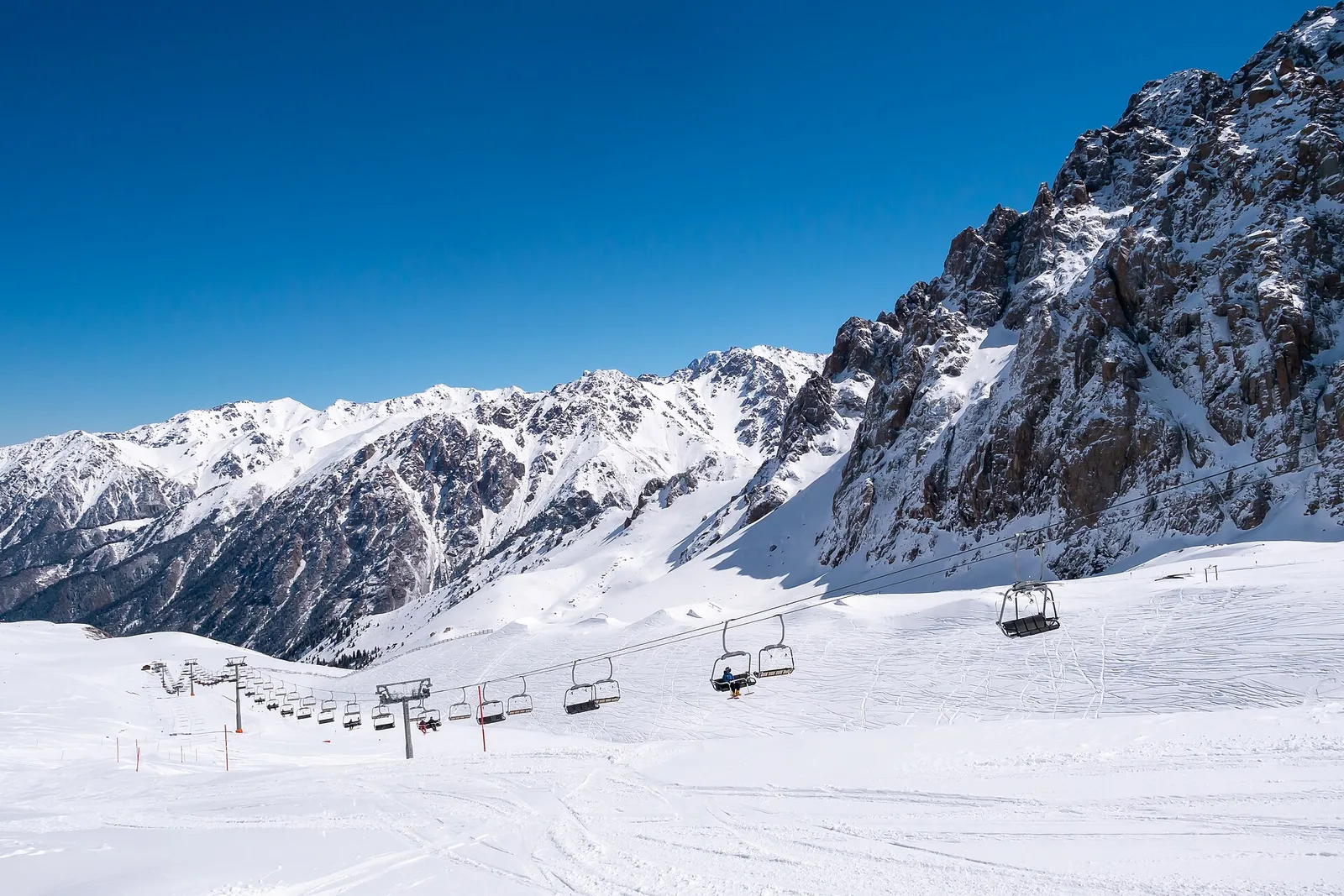
In short
- A manifesto on how to live Almaty rather than tick it off.
- Four axes of the city: Tau — mountains, Su — water, Dastarkhan — the table and its people, Uaqyt — time and layers.
- Fifty-two principles, one per week. Week one starts on 21 March, during Nauryz, the Kazakh New Year.
- Each principle comes with a weekly ritual that takes a minute to an hour.
Editorial team · 15 min read
This is our editorial reading of Almaty: how the city works and what it can teach someone who stays longer than a weekend. First a short manifesto, then the four axes, then fifty-two principles from Nauryz in March to the week before the next one. It is written today, by us. It is not ancient wisdom, and we don't put words in anyone else's mouth.
Manifesto
You step outside, in a hurry, checking your phone, and somewhere around the third step you look up. Above the roofs, the poplars and the wires stands a ridge, still white on top in May. The traffic is still there, the meeting is still at ten, but for a second everything gets smaller and calmer. In Almaty this happens almost every morning, if you look.
People often come here to get things done: Medeu in the morning, Kok-Tobe for sunset, the lake the next day, a photo by the sign and a flight home. The city slips past. It lives elsewhere: in the water running again along the streets in spring, in the tea bowl your host fills only halfway so they can pour again, in the week when the apple trees bloom and everything else can wait.
We see Almaty as a city you can practise. It has habits, and if you watch long enough they read like ways of living. We gathered them along four axes, named in Kazakh because the words fit best: Tau, the mountain; Su, water; Dastarkhan, the table; Uaqyt, time.
Tau: the mountain as a measure
The mountains to the south are visible from almost every street, and the city keeps checking itself against them. Uphill means towards the mountains, downhill means north, towards the steppe. If you can see every fold of the ridge, the air is clear; if the ridge is gone, the city is in haze. Next to the ridge, a meeting or a delay shrinks back to its real size.
The mountains start right behind the city, and it's tempting to go high straight away. Take it easy: the first trail can be short, mountain weather changes fast, and national park rules and routes are best checked on official pages before every outing.
Su: water and patience
In spring, water returns to the aryks, the shallow channels along the pavements that water the street trees. That's why central Almaty has shade in July. The snow that sits on the ridge in winter becomes the water of these rivers and channels in spring and summer.
Water teaches sabyr, patience. In a city of traffic jams and "I'll be there at seven" (meaning somewhere between seven and eight), this is a useful skill. Sit by Sairan reservoir or one of the rivers for twenty minutes and you'll see why.
Dastarkhan: the table and its people
Dastarkhan is the laid table and everything that happens around it. It's set with room to spare, as if someone else is about to walk in. Tea is poured a little at a time, so the conversation lasts longer and the guest keeps seeing they are welcome.
Almaty is a city of many people and many languages, and almost every street and dish has a story of someone arriving. At the Green Bazaar, ask a seller where something comes from and how it's cooked at home; the conversation is part of the purchase. And learn one word: rakhmet, thank you.
Uaqyt: time and layers
The year here starts in spring, at Nauryz on 22 March. Then come the apple blossom in April, acacia in May, the mountains in June, the bazaar and heat in July, watermelons in August, gold in September, memory in October, patience in November, long nights in December, ice in January and waiting in February.
The city has had four names: Zailiyskoe fort from 1854, Verny from 1867, Alma-Ata from 1921 and Almaty from 1993. The old name carries "alma", apple, and the wild apple Malus sieversii that grows in the foothills is considered by geneticists to be the main ancestor of the apples we eat.
Fifty-two weeks
Week one starts on 21 March, during Nauryz; week fifty-two ends the day before the next one. Pick the week you're in and try its ritual.
1. Start the year in spring
Week 1 · March · Uaqyt
2. Spring begins with a guest
Week 2 · March · Dastarkhan
3. A city with an apple in its name
Week 3 · April · Uaqyt
4. Blossom has to be caught
Week 4 · April · Uaqyt
5. You hear the aryk before you see it
Week 5 · April · Su
6. Check the day against the mountains
Week 6 · April · Tau
7. At the bazaar, you ask
Week 7 · May · Dastarkhan
8. After the storm the mountains come closer
Week 8 · May · Su
9. The city smells of its season
Week 9 · May · Uaqyt
10. Altitude begins with the first trail
Week 10 · May · Tau
11. The city was built by many
Week 11 · June · Dastarkhan
12. The mountain as a measure
Week 12 · June · Tau
13. The long evening is a second day
Week 13 · June · Uaqyt
14. Watch the water until it gets quiet
Week 14 · June · Su
15. Climb at your own pace
Week 15 · June · Tau
16. Tea is poured a little at a time
Week 16 · July · Dastarkhan
17. Heat rearranges the day
Week 17 · July · Uaqyt
18. The table is laid with room to spare
Week 18 · July · Dastarkhan
19. Shade is planted in advance
Week 19 · July · Su
20. A watermelon is cut for everyone
Week 20 · August · Dastarkhan
21. Stars beyond the city lights
Week 21 · August · Uaqyt
22. Store the summer
Week 22 · August · Uaqyt
23. See the city from above
Week 23 · August · Tau
24. Notice the end of summer
Week 24 · September · Uaqyt
25. Gold does not last
Week 25 · September · Uaqyt
26. A place tastes of its season
Week 26 · September · Dastarkhan
27. One spot for the whole year
Week 27 · September · Tau
28. Sadness is a season too
Week 28 · September · Uaqyt
29. A city with four names
Week 29 · October · Uaqyt
30. Ask those who remember
Week 30 · October · Uaqyt
31. The courtyard lives slower than the street
Week 31 · October · Uaqyt
32. An evening in the hall
Week 32 · October · Dastarkhan
33. The mountains announce winter early
Week 33 · November · Tau
34. Sabyr
Week 34 · November · Su
35. A hazy city is still the city
Week 35 · November · Uaqyt
36. Hot soup for two
Week 36 · November · Dastarkhan
37. The bathhouse gives back warmth
Week 37 · December · Su
38. Ice beneath the mountains
Week 38 · December · Tau
39. Some dates are met in silence
Week 39 · December · Uaqyt
40. The long night as a reserve
Week 40 · December · Uaqyt
41. There is room for everyone at the holiday table
Week 41 · December · Dastarkhan
42. Trust the ice
Week 42 · January · Su
43. Everyone notices a clear day
Week 43 · January · Tau
44. Recipes pass from hand to hand
Week 44 · January · Dastarkhan
45. Home is a practice too
Week 45 · January · Uaqyt
46. Water flows under the ice
Week 46 · February · Su
47. The mountain stores water for summer
Week 47 · February · Tau
48. Say thank you out loud
Week 48 · February · Dastarkhan
49. Spring arrives on a sunny wall
Week 49 · February · Uaqyt
50. The last snow leaves as water
Week 50 · March · Su
51. Thank the winter
Week 51 · March · Uaqyt
52. Tidy your life for Nauryz
Week 52 · March · Dastarkhan
Practical notes for visitors
- If you're visiting for a few days, pick the principles of your month: they follow the seasons.
- Most rituals need nothing but a walk, a cup of tea or a view of the mountains. None needs Russian or Kazakh, though 'rakhmet' (thank you) goes a long way.
- For anything in the mountains, check the weather and the national park rules on official pages before you go, and be back before dark.
- Entry rules, registration and visas change. Check the official sources for your passport before the trip.
Questions
What is the Almaty Way?
It's our editorial reading of the city: a manifesto, four axes and fifty-two principles, one for each week of the year, each with a small ritual you can do on your own.
Why does the year start in March?
In Kazakhstan, Nauryz, the spring equinox festival, is celebrated on 22 March and is greeted as the start of a new year. So week one of the Almaty Way starts on 21 March.
Is this traditional Kazakh wisdom?
No. The principles are written today and rest on what you can see in the city yourself: the mountains, the water, the table, the seasons. Traditions we mention, such as Nauryz and tea with guests, are described as living practice.
How we know this
- Checked September 29, 2026: City names: Zailiyskoe fort (1854), Verny (1867), Alma-Ata (1921), Almaty (1993) — Wikipedia (ru), «Алматы», Malus sieversii as the main ancestor of the domesticated apple: Velasco R. et al., Nature Genetics, 2010, Nauryz in Kazakhstan is celebrated on 22 March — Wikipedia (ru), «Наурыз».