 Almaty PracticesAlmaty Life Practices
In short
- The practice takes three minutes, right in the city. All you need is a clear day and a spot with a view south.
- Almaty sits in the northern foothills of the Trans-Ili Alatau, a range of the Tian Shan about 350 km long. Most streets running north–south end in mountains.
- You don't need to go into the mountains, hire a guide or speak Russian or Kazakh.
- Mornings are best: by midday clouds often gather over the peaks.
Editorial team · 5 min read
This is a three-minute practice for an ordinary day in Almaty, whether you live here or arrived yesterday. You walk to a street that runs south, stop, and look at the Trans-Ili Alatau, the range that rises right above the city. You trace the ridge from west to east, ask yourself one question and go on with your day. No booking, no equipment, no language needed.
The street that ends in snow
Your first morning in Almaty usually starts early, because your body hasn't landed yet. You walk out for coffee, turn a corner, and the street ends in mountains: dark forested slopes, and above them snow, even in summer.
Locals stop noticing this after a while. Visitors notice it every time. The Vertical Pause makes that noticing into a small habit you can keep for the rest of the trip and take home.
Why it works
Almaty sits in the northern foothills of the Trans-Ili Alatau, part of the Tian Shan, so the range fills the southern horizon. Its highest peak, Talgar, stands at 4,979 m.
Astronauts describe a related feeling when they see the whole Earth from orbit; the writer Frank White called it the overview effect in a 1987 book. A mountain range is a smaller scale, but the move is similar: when something very large and very old enters your field of view, your own list of worries rearranges itself.
Some items shrink: the email that can wait, the delayed transfer, the queue at the SIM counter. Some stay big. The practice is about seeing which is which. In Kazakh the virtue behind it is called sabyr, patience.
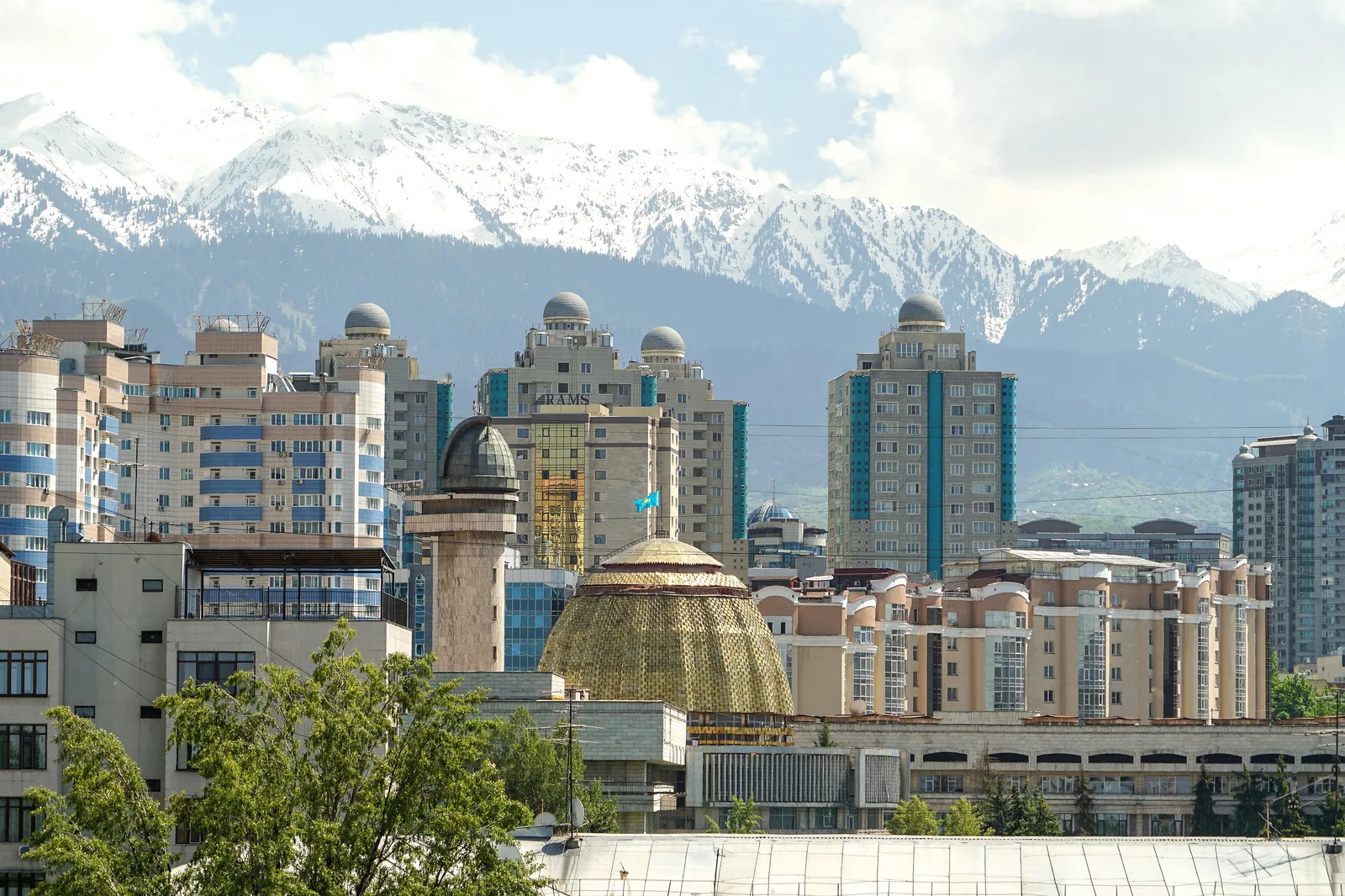
The practice: three minutes
- Stop10 seconds
Actually stop. Phone in your pocket, step away from the curb.
- Find the mountainsface south
A street running uphill will lead your eyes there.
- Trace the ridgefrom west to east
Slowly, as if reading a line. Notice snow, shadows, clouds.
- Ask one question1 minute
Which of the things on my mind will still matter next to these mountains?
- Three slow breaths30 seconds
Breathe out longer than you breathe in. Eyes on the ridge.
- Do one thingright after
One of the things that stayed big. The rest can wait.
Afterwards
On your last morning, do the pause once more from the same spot where you did it first. Then keep it: wherever you live, find the tallest thing on your horizon and give it three minutes.
First step: tomorrow morning, find the mountains before you reach for your phone.
Tips for visitors
- Mountains are always to the south. If you're lost in the grid, walk uphill: the city slopes up towards them.
- Dostyk Avenue and Nazarbayev Avenue both run north–south and end in the ridge. Any parallel street works too.
- For the view from above, take the cable car up Kok Tobe hill.
- Go in the morning. Clouds tend to build over the peaks later in the day, and in winter the city is often hazy.
- Step back from the curb when you stop. Traffic in Almaty moves fast.
Questions
What are these mountains?
The Trans-Ili Alatau (Ile Alatau in Kazakh), the northern range of the Tian Shan on the border between Kazakhstan and Kyrgyzstan. Its highest point is Talgar Peak, 4,979 m according to reference sources — nearly 5 km up.
Do I need to go into the mountains for this?
No. The practice is designed for the city. Trips into the mountains are a separate matter, with their own rules for trails and the national park; check the official sites before you go.
What if the mountains are hidden?
It happens on cloudy days and in winter haze. Face south, where the range is, and do the practice anyway.